
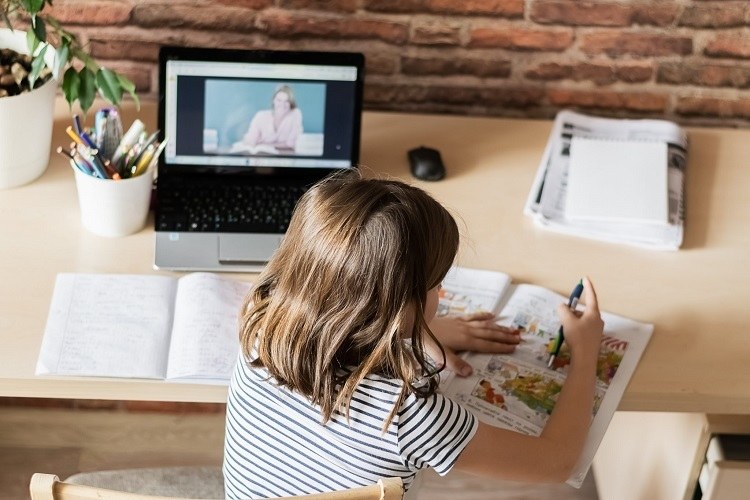
Many parents have complained that schools continue to use distance learning after the coronavirus pandemic ended. They believe this reduces children’s level of knowledge.
Parents highlight the following drawbacks of online education:
1. Some subjects cannot be mastered well remotely.
2. Teachers generally cannot see how a child works: whether they complete assignments themselves or receive help from parents, ready-made answers and so on. This makes evaluating homework and overall student performance difficult. More than 60% of pupils do not take online learning seriously and skip lessons.
3. Not every family can buy a computer, ensure quiet during lessons or create comfortable conditions for a child.
4. There is no direct interaction between children or dialogue with the teacher, including during breaks.
In addition, university representatives noted after the 2022 admissions campaign that applicants' Unified State Exam results were much worse than those of the previous year's first-year students. Physics and mathematics results deteriorated most. One reason is that pupils had to study these subjects remotely in 2020–2021.
Experience has shown that distance education cannot fully replace traditional education.
In this regard, distance learning should rightly be an exception when pupils cannot attend in person: because of severe frost, the spread of viral diseases, security measures and so on.